Your Passion, Our Protection
More than legal protection, we’re true partners to those shaping culture through creativity.





.gif) Basile Morin, CC BY-SA 4.0, via Wikimedia Commons
Basile Morin, CC BY-SA 4.0, via Wikimedia Commons
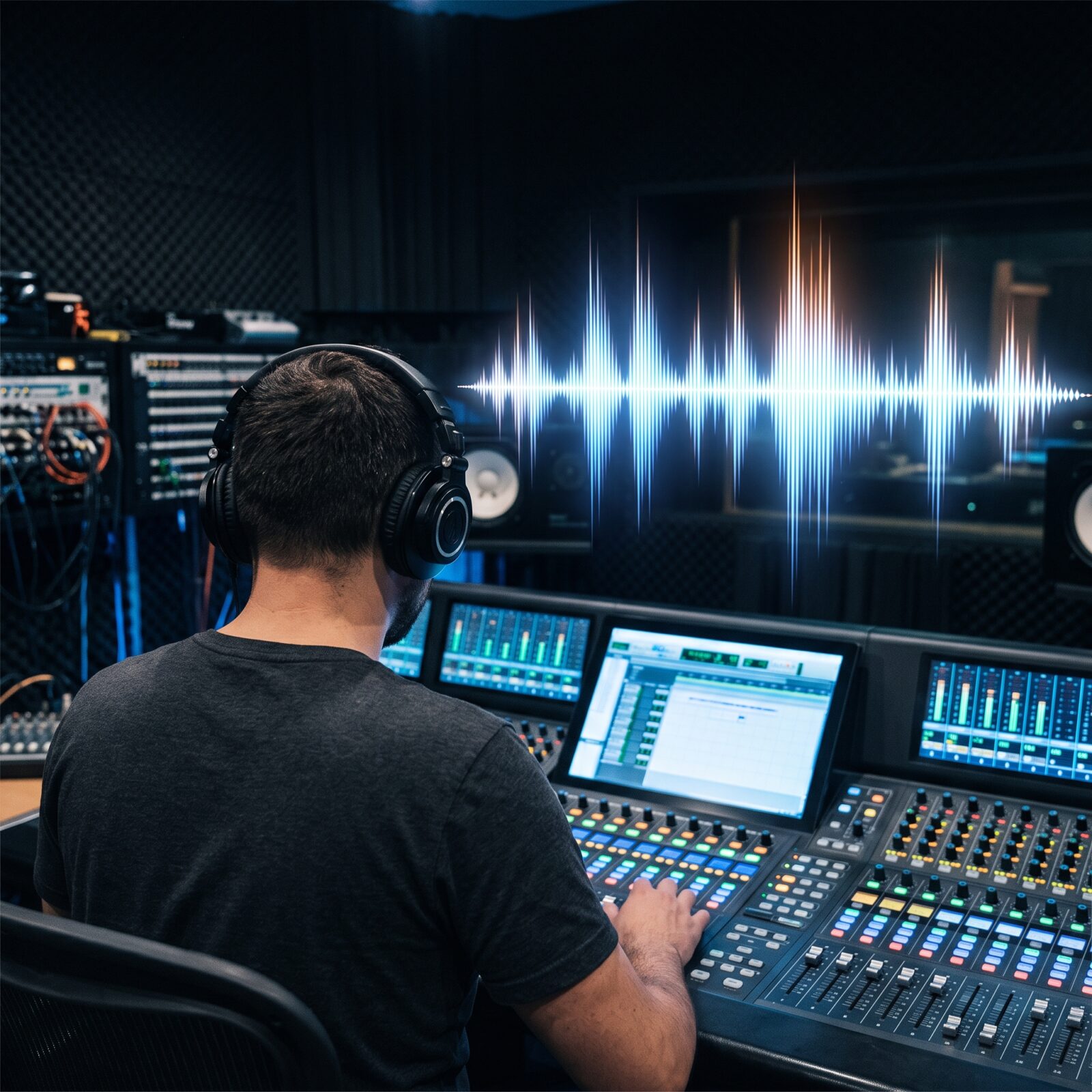
Voice cloning technology has advanced so rapidly that, as of 2025, 97% of listeners cannot reliably identify AI-generated music when actively trying to do so. An AI-powered act called Breaking Rust hit #1 on Billboard's Country Digital Song Sales chart in 2025 using AI-generated vocals. The AI voice generator market was valued at approximately $4.16 billion in 2025. And behind these statistics lies a growing crisis: the unauthorized use of real artists' voices—cloned without consent and deployed on social media for commercial purposes—represents one of the most serious emerging forms of music theft.
When an AI voice clone of a real artist is created and used without permission, multiple legal rights are violated simultaneously:
Copyright infringement — Training an AI model on an artist's recordings without a license infringes the artist's sound recording copyright. The GEMA (Germany's performing rights organization) sued Suno in January 2025 on precisely this basis, alleging that Suno's AI produced content closely mirroring GEMA-represented works, suggesting the model was trained on those recordings without authorization.
Right of publicity — Every person has the right to control the commercial use of their name, likeness, and voice. An AI-generated clone of Drake or Taylor Swift used in a brand's social media campaign violates the artist's right of publicity, regardless of whether copyright is technically infringed.
False endorsement/association — When a voice clone makes it appear that a real artist has endorsed or is associated with a product, it may constitute false advertising under the Lanham Act as well as state unfair competition laws.
 Deborahjay, CC BY-SA 4.0, via Wikimedia Commons
The legal landscape has responded quickly. In 2024, Tennessee enacted the ELVIS Act (Ensuring Likeness, Voice, and Image Security)—the first state law to expressly extend right-of-publicity protections to AI-generated voice clones. The Act criminalizes unauthorized digital replication of a person's voice and provides civil remedies.
Following Tennessee, California (AB 2602 and AB 1836), New York, Texas, and Illinois have introduced or strengthened statutes targeting unauthorized digital replicas in entertainment and commercial settings. At the federal level, the TAKE IT DOWN Act, signed into law in May 2025, addresses non-consensual synthetic imagery and requires platforms to remove reported content.
In the European Union, Article 50 of the AI Act imposes transparency obligations for AI-generated or manipulated content, including voice deepfakes. China's deep synthesis rules impose labeling requirements and identity-manipulation prohibitions on providers and users of synthetic media services.
The result is what one legal analysis calls "a growing global patchwork"—with consequences that "can trigger criminal liability, consumer-protection claims, platform-removal obligations, or identity-rights lawsuits—depending on where your business operates and which country's law applies first."
Social media platforms are the primary venue where voice clone content spreads. AI-generated "covers" of copyrighted songs using cloned artist vocals go viral on TikTok, Instagram, and YouTube. Brands use cloned voices to create advertising content that implies celebrity endorsement. Fan accounts create fake artist statements or musical performances using cloned voices, spreading misinformation.
For brands: using an AI-cloned celebrity voice in commercial content without authorization is not a gray area. It is a clear violation of right of publicity, potential copyright infringement, and likely false endorsement. The exposure is not just civil—in multiple jurisdictions in 2026, it may be criminal.
 Trizek, CC0, via Wikimedia Commons
For independent artists, voice cloning represents a new category of theft that requires new protective measures:
Detection tools: Services like Soundverse Trace conduct deep search operations across publicly available AI-generated audio databases, comparing your original voice samples against suspected clones using precision fingerprinting.
Documentation: Keep high-quality original recordings with clear timestamps as evidence of original voice ownership. Metadata, recording session files, and DAW project archives establish chain of custody.
Registration: While a voice itself is not directly registrable with the Copyright Office, the sound recordings in which your voice appears are. Register your releases to establish ownership of the recordings your voice appears in.
Legal action: If your voice is cloned without authorization, consult an IP attorney specializing in digital identity rights. Evidence collection should include voice match reports, copies of the cloned audio, metadata showing ownership, and social media links with timestamps.
The voice is the most personal of instruments. Protecting it in the age of synthetic media requires understanding both the technology and the law—and acting before unauthorized clones define you without your consent.
From general questions to potential IP misuse, choose the option that best fits your case.
Our team will review your submission and get back to you as soon as possible.