Your Passion, Our Protection
More than legal protection, we’re true partners to those shaping culture through creativity.




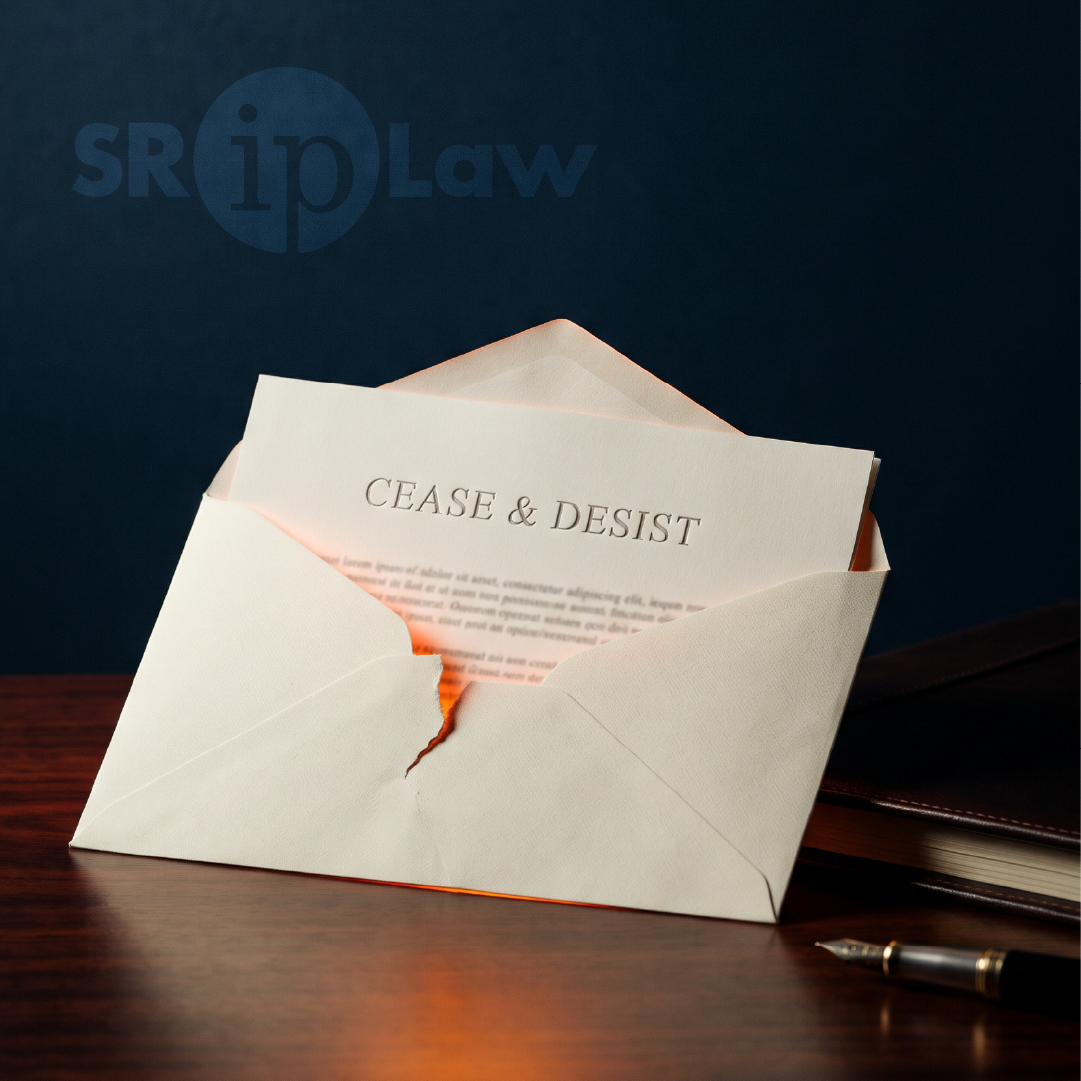

A cease and desist letter is one of the most powerful tools in the copyright enforcement toolkit—and one of the most misunderstood. For independent artists who discover their music being used without permission, a well-crafted cease and desist letter can stop infringement, recover compensation, and avoid costly litigation. For brands and creators who receive one, it is a serious legal warning that demands immediate, informed action. Understanding what these letters mean and how to respond appropriately is essential knowledge in 2026's enforcement-heavy social media environment.
A cease and desist letter is a formal written demand from a copyright holder (or their attorney) requiring the recipient to stop specific infringing activity. Unlike a DMCA takedown notice, which goes to a platform, a cease and desist goes directly to the alleged infringer. It is not a lawsuit—but it is a clear warning that a lawsuit may follow if the demands are not met.
A properly drafted cease and desist for music copyright infringement typically includes:
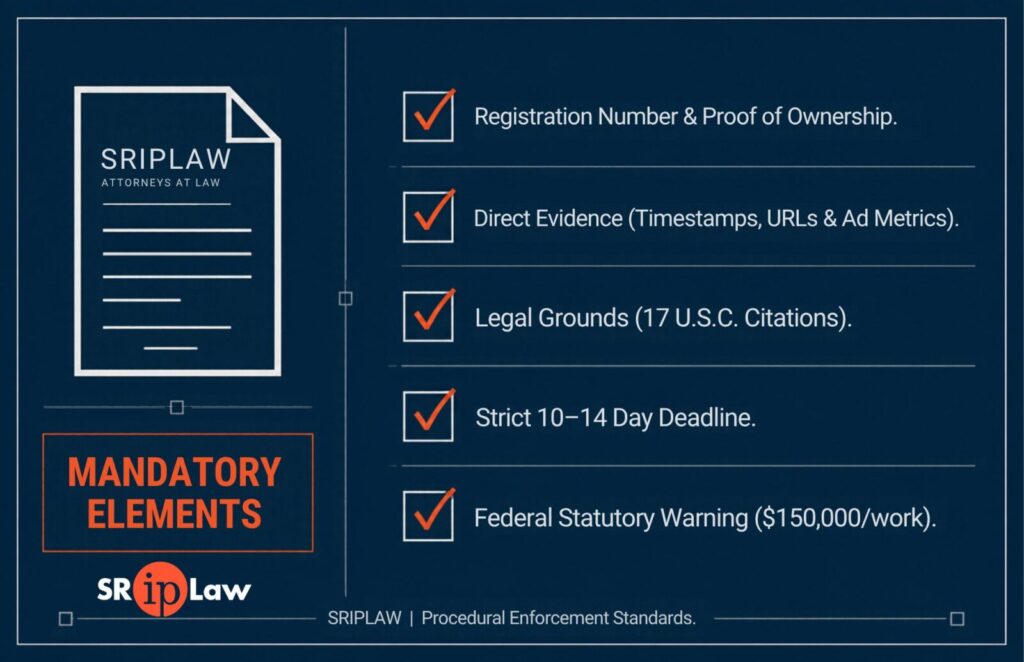
Send a cease and desist when:
Gather this evidence first:

While templates are available online, a cease and desist letter in a significant infringement matter should ideally be drafted by or reviewed by an entertainment attorney. The letter carries greater credibility and legal weight when it comes on attorney letterhead.
Delivery: Send via certified mail with return receipt requested. Also send copies by email if you have a verified address. Keep records of all transmission methods and confirmations.
Tone: Professional and factual, not emotional. The letter should read as a legal document, not a personal complaint. Anger or inflammatory language undermines credibility and may be used against you in subsequent litigation.
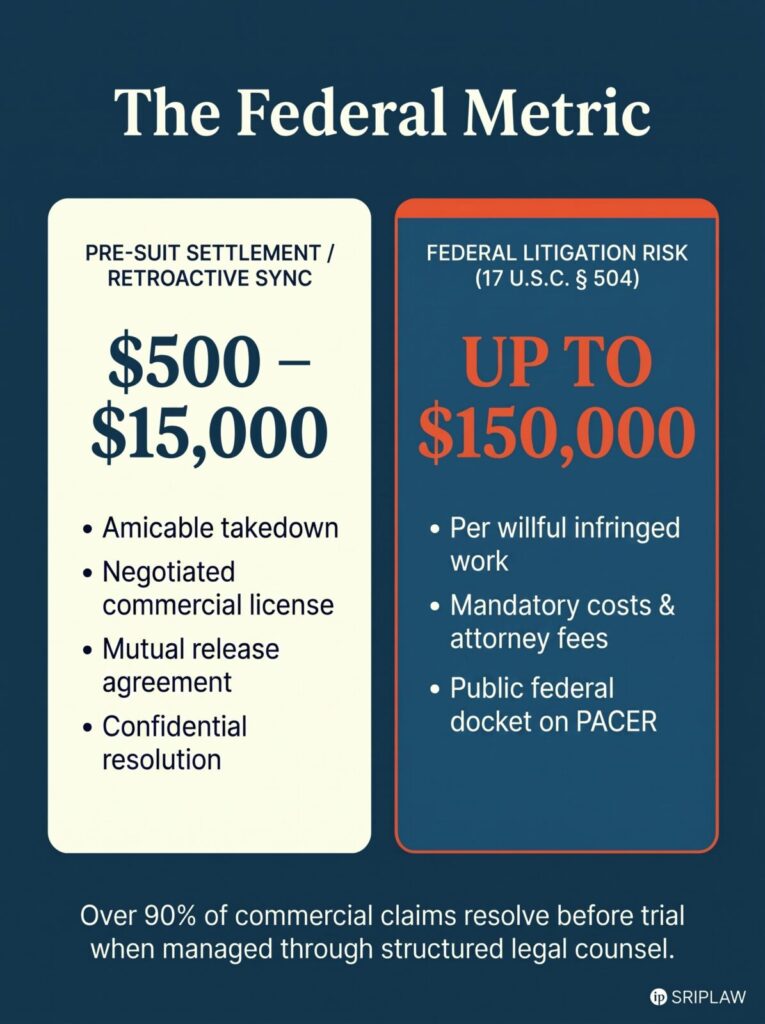
Pricing your demand: When calculating the licensing fee to demand, research comparable licensing rates for your type of music in the type of commercial context where the infringement occurred. Industry benchmarks for social media commercial use range from $500 to $15,000 for independent artists depending on campaign scope. You may also demand compensation for the period of unauthorized use.
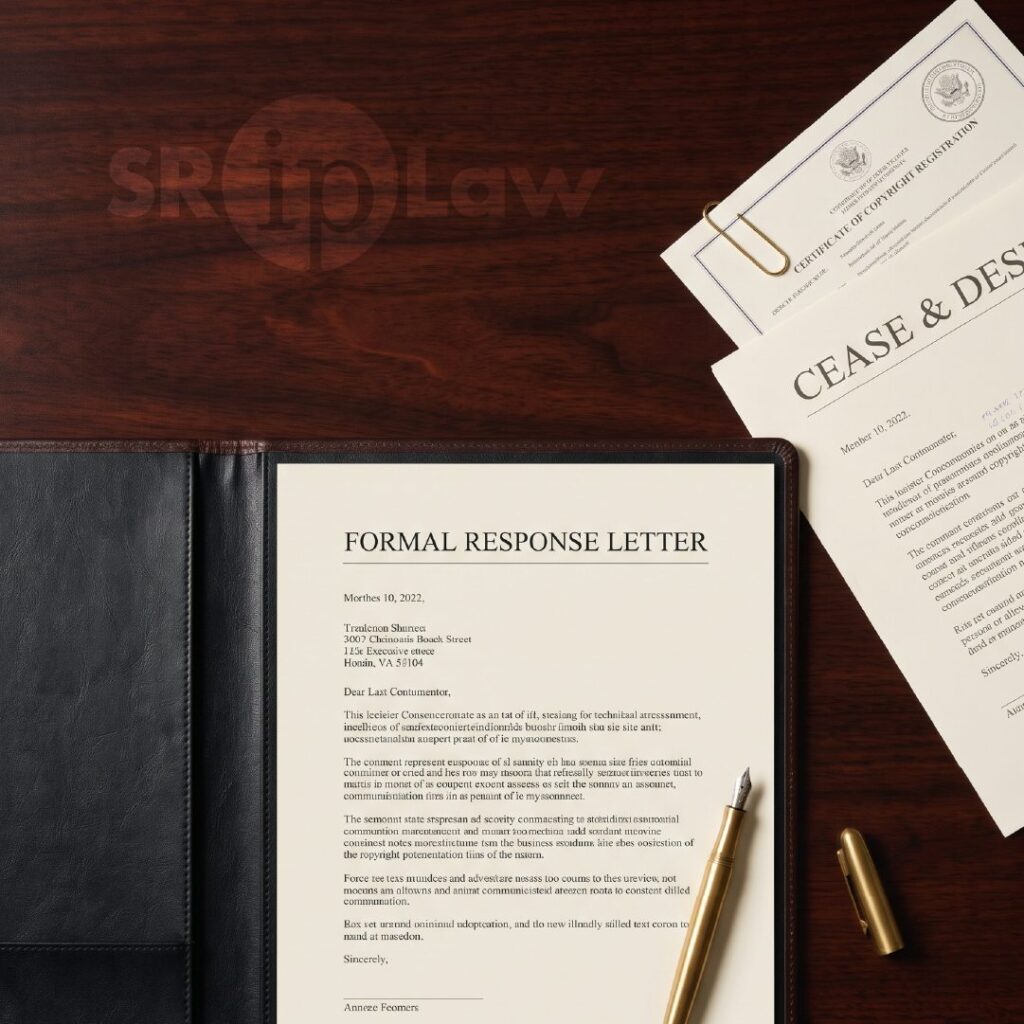
Receiving a cease and desist letter is serious. Do not ignore it. The appropriate response depends on the facts of your situation.
Step 1: Do not ignore it or delay
The letter sets a compliance deadline. Missing the deadline without response strengthens the rights holder's position and may be presented as evidence of willfulness in subsequent litigation.
Step 2: Do not admit liability
Do not send a response admitting that you used the music without a license—even in an informal email. Any admissions can be used against you in litigation.
Step 3: Consult an attorney immediately
Before responding, engage an entertainment or IP attorney. The attorney can assess whether the claim is valid, whether any defenses apply (fair use, license, misidentification), and what your optimal response strategy is.
Step 4: Assess your position honestly
If you genuinely used the music without a license and cannot identify a valid defense, the most practical resolution is often negotiating a retroactive license or settlement. This is almost always less expensive than litigation.
Step 5: Respond within the deadline
Your attorney should send a written response by the deadline, either: (a) disputing the claim with supporting evidence, (b) acknowledging and offering a settlement, or (c) confirming removal of the content and requesting a release.
Not every cease and desist leads to a lawsuit. Many are resolved through negotiation. The factors that typically determine whether a rights holder escalates to litigation include: the value of the infringement, the responsiveness of the alleged infringer, the rights holder's appetite for litigation costs, and whether the matter involves a pattern of repeated infringement. Understanding this dynamic helps both artists deciding whether to send a letter and brands deciding how to respond to one.
From general questions to potential IP misuse, choose the option that best fits your case.
Our team will review your submission and get back to you as soon as possible.