
Your Passion, Our Protection
More than legal protection, we’re true partners to those shaping culture through creativity.




_-_Central_Park,_NYC.jpg)
By: Tyler S. Unfer
Fashion communicates identity, culture, and social evolution without saying a word. From sharply tailored suits to expressive streetwear, fashion reflects both individual creativity and broader societal movements. It can signal rebellion or conformity, heritage or innovation, status or subversion.
Across decades, fashion has mirrored political climates, economic shifts, and cultural revolutions, making it one of the most immediate and visible forms of human expression.
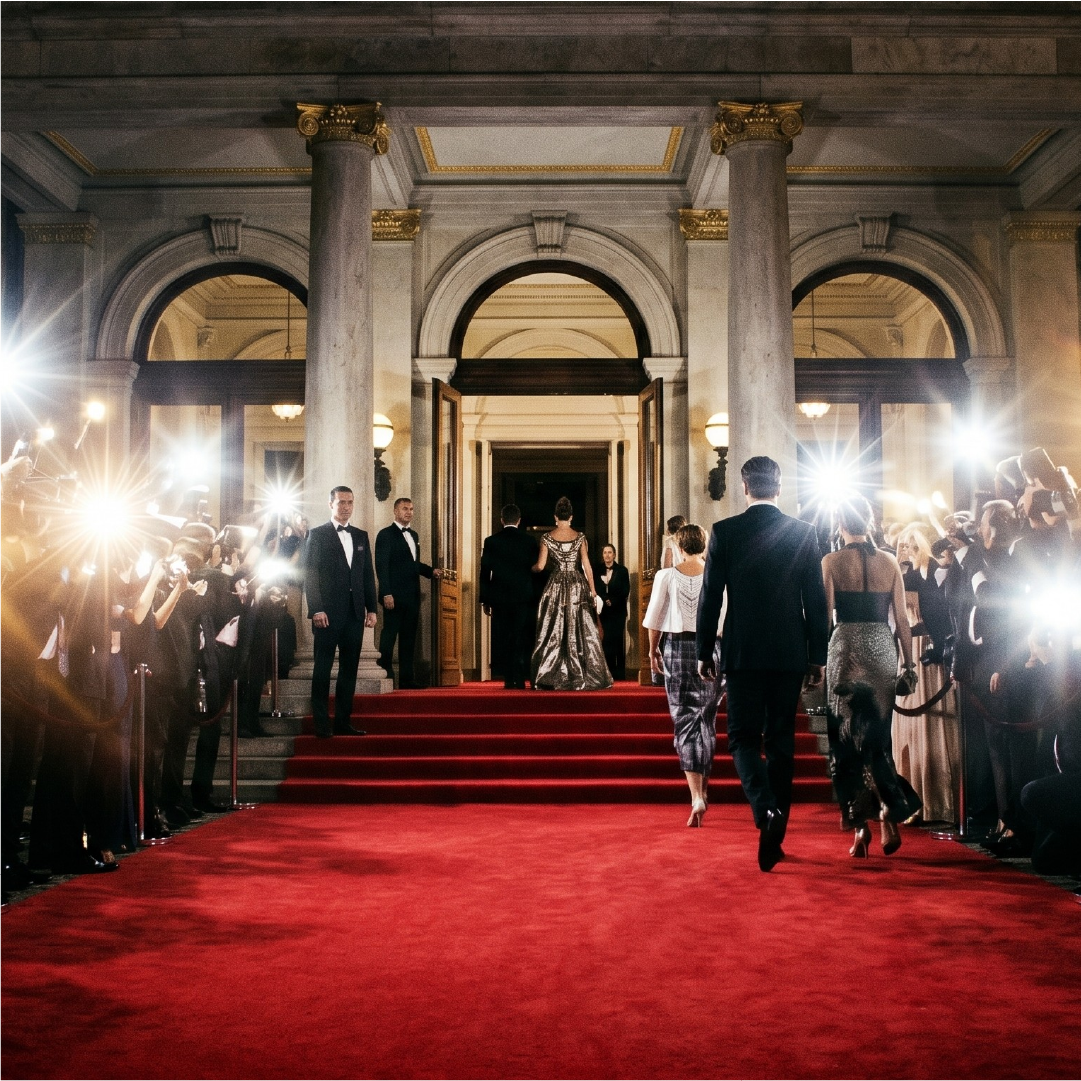
Nowhere is this more visible than at the Met Gala, the annual fundraiser for the Metropolitan Museum of Art’s Costume Institute.

Often described as “fashion’s biggest night,” the Met Gala has evolved far beyond its philanthropic roots into a global cultural phenomenon where fashion, celebrity, media, and art converge. What began in 1948 as a modest midnight supper organized by publicist Eleanor Lambert, has transformed into a meticulously curated spectacle under the long-standing leadership of Vogue Editor-In-Chief Anna Wintour.
Today, it serves not only as a fundraiser but as a stage for narrative-driven fashion, where designers and celebrities collaborate to produce looks that are as conceptual as they are visually striking. The Met Gala’s influence extends well beyond the red carpet. It sets the tone for fashion discourse each year, often dictating trends, inspiring collections, and shaping public conversations about art, identity, and representation.
Its themes, ranging from “Heavenly Bodies: Fashion and the Catholic Imagination” to “Camp: Notes on Fashion,” challenge designers to interpret complex cultural and historical ideas through clothing, blurring the line between garment and artwork. In doing so, the Met Gala helped legitimize fashion as a serious artistic discipline, elevating it within both museum spaces and academic discourse.
In the age of social media, the event has taken on even greater significance. Red carpet moments are dissected in real time, with standout designs instantly entering the cultural lexicon. A single look can launch careers, redefine a designer’s brand, or spark global debate. The Met Gala also serves as a rare intersection bringing together figures from fashion, film, music, sports, and politics, making it a powerful reflection of contemporary culture at large.
The 2026 Met Gala, taking place on May 4, will celebrate the exhibition “Costume Art” with a dress code of “Fashion Is Art,” exploring the dressed body as a form of artistic expression with an emphasis on sculpture and conceptual design. This year’s event underscores fashion’s position at the intersection of artistry and cultural commentary.
But behind the glamour, fashion operates within a surprisingly fragile legal framework, especially in the United States. Unlike music, film, or literature, clothing design receives limited intellectual property protection.
.png)
Copyright law, governed by 17 U.S.C. § 101, does not generally protect “useful articles,” which includes garments. Only separable artistic elements such as textile prints, graphics, or embellishments can qualify for protection. The actual structure of a garment (its cut, shape, or silhouette) is largely left unprotected. This creates a reality where original designs can be replicated with minimal legal consequences, so long as branding, logos or other protected artwork is not directly copied.
Trademark law fills part of the gap, but only at the brand level. Logos, names, and distinctive identifiers like Nike’s swoosh or Gucci’s interlocking Gs are protectable under the Lanham Act. However, trademarks do not extend to the design of the clothing itself unless it rises to the level of “trade dress.” Even then, protection requires proof that the design has acquired distinctiveness and serves as a source identifier, a high evidentiary bar that most designers, particularly emerging ones, cannot easily meet (Two Pesos, Inc. v. Taco Cabana, Inc., 505 U.S. 763 (1992)).
Design Patents offer another option, protecting the ornamental aspects of a product under 35 U.S.C. § 171. In theory, this could cover unique garment designs but in practice, however, design patents are expensive, take months (or longer) to secure, and last only 15 years from issuance.
Given the speed of fashion cycles, where trends can rise and fall within a single season, this protection often arrives too late to be commercially meaningful. This timing mismatch is one of the most widely cited criticisms in fashion law scholarship (see: Kal Raustiala & Christopher Sprigman, “The Piracy Paradox,” Virginia Law Review).

The result is a paradox: fashion is one of the most creatively rich industries, yet one of the least protected. Fast fashion brands have built entire business models around rapidly translating runway looks into mass-market products, often within weeks. While this raises ethical and business concerns, it remains largely lawful under current U.S. frameworks. Legislative proposals, such as the Innovative Design Protection Act, have attempted to address this gap, but none have been enacted to date.
And yet - fashion thrives. In many ways, its openness fuels its energy. Designers continue to innovate, remix, and reinterpret ideas in a constant cycle of inspiration. More importantly, there are practical ways to protect fashion work.
Designers can register copyrights for original prints and textile designs, secure trademarks to build strong brand identity, and selectively pursue design patents for high-value or signature pieces. Beyond formal IP tools, strategies like limited releases, collaborations, and strong brand storytelling can create market differentiation that is just as powerful as legal protection. At its core, fashion remains fun, bold, expressive, and endlessly evolving. It invites experimentation and rewards originality, even in a system that doesn’t always
At SRIPLAW, we help designers, brands, and creative entrepreneurs navigate this exact intersection of artistry and legal protection. Whether you are launching a new label, protecting a signature design, or building a brand that stands out in a crowded market, our team provides strategic guidance tailored to the realities of the fashion industry. From copyrights and trademarks to design patents and brand enforcement, we work to ensure your creativity is not only seen, but safeguarded.
Contact us to learn more about how we can protect your passion.
The information in this article is here is for educational purposes only and does not constitute legal advice.
From general questions to potential IP misuse, choose the option that best fits your case.
Our team will review your submission and get back to you as soon as possible.